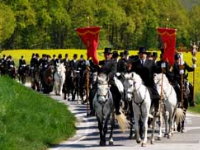
Strona pokazuje, kajke křižerske spěwy so wužiwanja, a přidawa wideja k temje.
A tu hišće wideo k temje spěw:
Hladajo na to, zo so hłosowki křižerja jutrownu njedźelu nimale štyri hodźiny ćěžko napinaja, hodźeli so sćěhowace zasady wobkedźbować, zo njeby hłós po jutrach wjetšu škodu měł:
při spěwanju / jěchanju: runy chribjet, ramjenja dozady, tak zo nastanje mjez šiju a hłowu tak mjenowany powětrowy šćežor.
Najlěpje je, hdyž dźerži so křižerska knižka we wysokosći hrudźe (optimalna je linija mjez wočomaj, knižku a wušomaj konja). Najlěpje spěwać hodźa so wokale (a,e,i,o,u). Při spěwanju klinča najlěpje, hdyž so huba daloko wočini, tak zo móhł znajmjeńša dwaj porstaj do njeje tyknyć.
Z tym nastanje optimalna rezonanca zynkow – a lutuja so mocy.
– Prošu nic rjejić, ale z wěstym „ćišćom z brjucha“ spěwać, wšo druhe škodźi hłosowkam a špatnje klinči. Hdyž sće hižo w susodnej wosadźe dybawi, su so hłosowki přenapinali.
– Hdyž zběhnje so knižka, je to znamjo za dalši spěw.
– Naš kantor Michał Paška (Baćoń) poda pola kóždeje štučki prěnju złóžku sam. Křižerjo na njeho poskaja, wotebjeru zwuk a zasadźa po dalšich złóžkach wótře, jasnje, přeswědčiwje, jednohłósnje a synchronje w samsnym tempje. Mjez linkami słucha kóždy na zbytny procesion, hač je synchronita hišće data. Jeli trjeba, koriguje so kóždy sam. Spěwa so hač k poslednjej złóžce.
w přestawce:
– radšo ćopły kofej, mloko abo čaj pić, hač hnydom zymne napoje
– za hłosowki je lěpje, so při kofeju jědźe z wjele kisalinami wzdać (worjechi, tomaty)
Přejemy wjele wjesela při spěwanju.
Hier noch ein Video zum Thema Gesang:
Da die Stimmbänder eines Kreuzreiters am Ostersonntag fast vier Stunden lang stark beansprucht werden, sollten folgende Hinweise beachtet werden, damit die Stimme nach Ostern keinen größeren Schaden nimmt:
Beim Singen / Reiten: gerader Rücken, Schultern nach hinten, sodass zwischen Hals und Kopf der sogenannte Luftkanal entsteht.
Am besten hält man das Kreuzreiter-Büchlein auf Brusthöhe (optimal ist eine Linie zwischen den Augen, dem Buch und den Ohren des Pferdes). Am besten lassen sich die Vokale (a, e, i, o, u) singen. Beim Singen klingt es am besten, wenn der Mund weit geöffnet wird, sodass mindestens zwei Finger hineinpassen würden.
So entsteht eine optimale Klangresonanz – und Kraft wird gespart.
– Bitte nicht schreien, sondern mit bewusstem „Druck aus dem Bauch“ singen. Alles andere schadet den Stimmbändern und klingt schlecht. Wenn ihr schon in der Nachbarpfarrei heiser seid, wurden die Stimmbänder überbeansprucht.
– Wenn ein Lied im Büchlein zu Ende ist, ist das das Zeichen für das nächste Lied.
– Unser Kantor Michał Paška (Baćoń) gibt bei jedem Lied die erste Strophe allein vor. Die Kreuzreiter hören auf ihn, übernehmen den Ton und setzen ab den weiteren Strophen kräftig, klar, überzeugend, einstimmig und synchron im selben Tempo ein. Zwischen den Zeilen hört jeder auf die übrige Prozession, ob die Synchronität noch gegeben ist. Wenn nötig, korrigiert sich jeder selbst. Gesungen wird bis zur letzten Strophe.
In der Pause:
– lieber warmen Kaffee, Milch oder Tee trinken statt eiskalter Getränke
– für die Stimmbänder ist es besser, zum Kaffee auf stark säurehaltige Speisen zu verzichten (zum Beispiel Nüsse, Tomaten)
Wir wünschen viel Freude beim Singen.
Here is another video on the topic of singing:
Because the vocal cords of a cross rider are heavily strained for almost four hours on Easter Sunday, the following advice should be observed so that the voice does not suffer major damage after Easter:
When singing / riding: keep your back straight and shoulders back so that the so-called air passage opens between neck and head.
It is best to hold the cross rider’s booklet at chest height (ideally there is a line between the eyes, the booklet and the horse’s ears). Vowels (a, e, i, o, u) are easiest to sing. When singing, the sound is best if the mouth is opened wide enough for at least two fingers to fit inside.
This creates optimal resonance – and saves energy.
– Please do not shout, but sing with conscious “pressure from the abdomen”. Anything else damages the vocal cords and sounds poor. If you are already hoarse in the neighbouring parish, the vocal cords have been overstrained.
– When a song in the booklet ends, that is the sign for the next song.
– Our cantor Michał Paška (Baćoń) starts each hymn by singing the first verse alone. The cross riders listen to him, take over the pitch and then join in from the following verses powerfully, clearly, convincingly, in unison and synchronised in the same tempo. Between the lines everyone listens to the rest of the procession to check whether the synchrony is still there. If necessary, each person corrects himself. Singing continues until the final verse.
During the break:
– it is better to drink warm coffee, milk or tea instead of ice-cold drinks
– for the vocal cords it is better to avoid highly acidic foods with coffee (for example nuts, tomatoes)
We wish you much joy in singing.