krótki přehlad
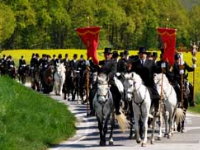
Strona wujasnja symboliski natwar procesiona a pokazuje wobrazy chorhojow, křiža, wěnčkow a gratow.
Kantor Michał Paška předstaji natwar křižerskeho procesiona.
| W křižerskim procesionje su wšelakore symbole a znamjenja k widźeć. Tute maja wosebity woznam. Znamjenja w kóždym procesionje trochu měnjeja. | ||
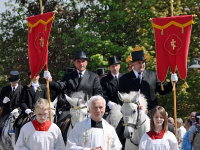
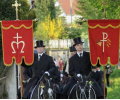 | 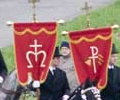 | Chorhoje su wažny symbol procesiona. Na chorhojach spóznaješ wosadu křižerjow. Woni steja na prědnjej pozicij. Na chorhojach widźimy husto křiž a znamjenjo z rowa stanjeneho zbóžnika. W Kulowskim procesionje dźěla chorhoje w srjedźnim dźělu serbski a němski procesion křižerjow. |
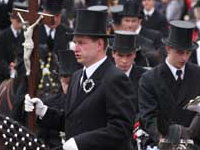
 | 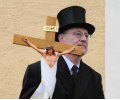 | Potom sćěhuje křiž. Wón dopomina na smjerć Jězusa Chrystusa a wupraja, zo ma kóždy za Jězusom kročić a swój křiž w žiwjenju njesć. Křiž da zdobom křižerjam prawe mjeno. (Njejsu jutrowni jěcharjo ale „křižerjo“). |
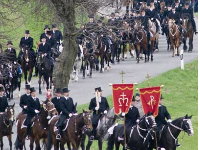
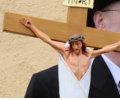
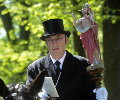 | 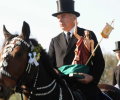 | Na třećim městnje w procesionje sćěhuje Boža martra. Je to postawa Jězusa, kiž symbolizuje skřižowaneho zbóžnika, kotryž je za nas smjerć přewinył a z mortwych stanył. |
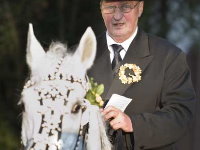
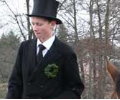 | 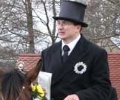 | Wěnčki pokazuja na wosebite jubileje křižerja. Zeleny wěnčk dóstanje nowačk, slěborny ma jěcharja kiž 25 króć sobu jěcha. Złoty wěnčk wuznamjeni jěchar, kiž je hižo połsta lět křižer. Wěnčki přepodaja so jubilaram na Božej mši w jutrownej nocy wot knjeza fararja. |
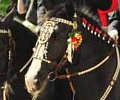
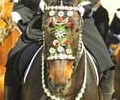 | 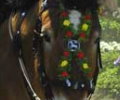 | Konje su rjenje z gratom pyšene. Na gratach su widźeć symbole, kaž na přikład małke křiže, mušle, kwětki – kiž nowe žiwjenje symbolizuja – abo sekle. Kwětkace motiwy su hustodosć na wopušacej sekli konja widźeć. Hdyž so w swójbje jěcharja žaruje, přićini so město běłej čorna sekla. |
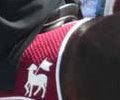 | 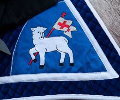 | Konje noša pod sedłom wudebjenu šabraku. Na njej su často symbole jehnjeća, kiž na zbóžnika Jězusa Chrystusa dopominaja. Wužiwaja so módre, zelene, čerwjene a čorne šabraki. |
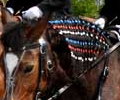 |  | Hriwy konjow su tohorunja rjenje wupyšene. Jěcharjo pletu z hriwy na přikład mustry abo zapletu z małymi banćikami serbsku chorhoj. |
Kantor Michał Paška stellt den Aufbau der Kreuzreiterprozession vor.
| In der Kreuzreiterprozession gibt es verschiedene Symbole und Zeichen zu sehen. Sie haben jeweils eine besondere Bedeutung. Die genaue Ausgestaltung unterscheidet sich von Prozession zu Prozession ein wenig. | ||
| | Fahnen sind ein wichtiges Symbol der Prozession. An ihnen erkennt man die jeweilige Pfarrei der Kreuzreiter. Sie stehen an vorderster Stelle. Auf den Fahnen sehen wir häufig das Kreuz und ein Zeichen des auferstandenen Erlösers. In der Crostwitzer Prozession trennen die Fahnen in der Mitte den sorbischen und den deutschen Teil der Kreuzreiterprozession. |
| | Danach folgt das Kreuz. Es erinnert an den Tod Jesu Christi und drückt aus, dass jeder Jesus nachfolgen und sein eigenes Kreuz im Leben tragen soll. Das Kreuz gibt den Kreuzreitern auch ihren eigentlichen Namen. (Es sind nicht einfach Osterreiter, sondern „Kreuzreiter“.) |
| | An dritter Stelle in der Prozession folgt die Statue des Herrn. Es ist eine Figur Jesu, die den gekreuzigten Erlöser symbolisiert, der für uns den Tod überwunden hat und von den Toten auferstanden ist. |
| | Kränze weisen auf besondere Jubiläen eines Kreuzreiters hin. Einen grünen Kranz erhält ein Neuling, ein silberner kennzeichnet einen Reiter, der 25-mal mitgeritten ist. Ein goldener Kranz zeichnet einen Reiter aus, der bereits 50 Jahre Kreuzreiter ist. Die Kränze werden den Jubilaren in der Osternachtmesse vom Pfarrer überreicht. |
| | Die Pferde sind festlich geschmückt. Auf dem Schmuck sieht man Symbole wie kleine Kreuze, Muscheln, Blumen – sie stehen für neues Leben – oder Schleifen. Blumenmotive sind oft auf der Schweifschleife des Pferdes zu sehen. Wenn in der Familie des Reiters getrauert wird, wird statt einer weißen eine schwarze Schleife angebracht. |
| | Unter dem Sattel tragen die Pferde eine bestickte Schabracke. Darauf befinden sich oft Lamm-Symbole, die an Jesus Christus erinnern. Verwendet werden blaue, grüne, rote und schwarze Schabracken. |
| | Auch die Mähnen der Pferde sind schön geschmückt. Die Reiter flechten zum Beispiel Muster in die Mähne oder arbeiten mit kleinen Schleifen die sorbische Fahne ein. |
Cantor Michał Paška presents the structure of the cross riders’ procession.
| | There are various symbols and signs to be seen in the cross riders’ procession. Each of them has a special meaning. The exact arrangement differs slightly from one procession to another. Flags are an important symbol of the procession. They identify the parish of the cross riders and stand at the very front. The flags often show the cross and a sign of the risen Redeemer. In the Crostwitz procession, the flags in the middle separate the Sorbian and German sections of the procession. |
| | Then follows the cross. It recalls the death of Jesus Christ and expresses that everyone should follow Jesus and carry their own cross in life. The cross also gives the cross riders their proper name. They are not simply Easter riders, but “cross riders”. |
| | In third place in the procession comes the sacred figure. It is a figure of Jesus symbolising the crucified Saviour, who overcame death for us and rose again. It points to the Easter message of resurrection. |
| | Wreaths indicate special anniversaries of a cross rider. A green wreath is given to a newcomer, a silver wreath is worn by a rider who has ridden 25 times, and a golden wreath marks a rider who has already been a cross rider for 50 years. The wreaths are presented to the jubilarians by the parish priest during the Easter Vigil Mass. |
| | The horses are festively decorated. On the adornment you can see symbols such as small crosses, shells, flowers – standing for new life – or bows. Floral motifs are often visible on the horse’s tail bow. If the rider’s family is mourning, a black bow is used instead of a white one. |
| | Under the saddle the horses wear an embroidered saddle cloth. It often shows lamb symbols that recall Jesus Christ. Blue, green, red and black saddle cloths are used. |
| | The horses’ manes are also beautifully decorated. Riders braid patterns into the mane, for example, or work small bows in the colours of the Sorbian flag into it. |